Smart Meter Transition: Key Rules, Benefits, and Eligibility for the 20% Electricity Bill Rebate Scheme
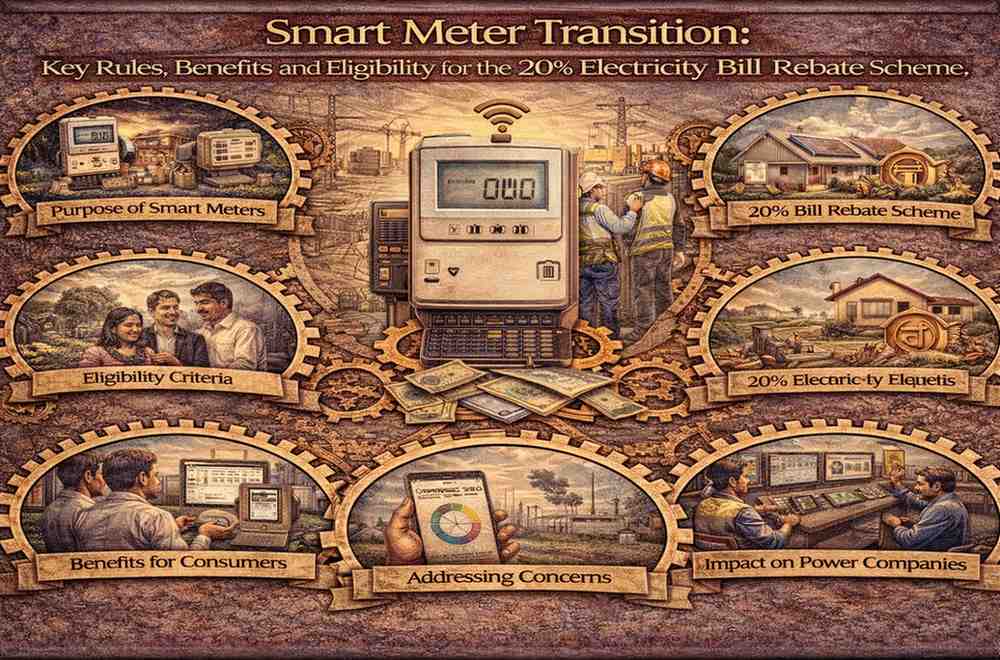
India’s power sector is undergoing a major transformation as smart meters are rolled out across states to modernise electricity distribution, reduce losses, and empower consumers. At the centre of this transition is a consumer-facing incentive: an electricity bill rebate of up to 20 percent for eligible users who shift to smart metering under approved schemes. As implementation gathers pace, understanding the rules, benefits, and eligibility criteria has become essential for households, businesses, and policymakers alike.
Why India Is Moving Toward Smart Meters
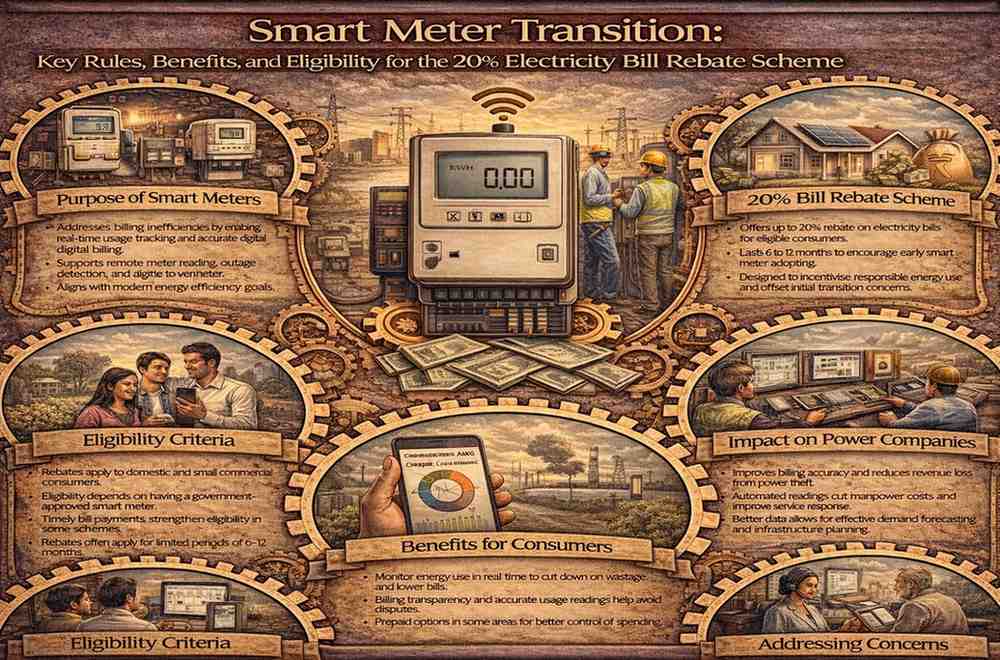
India’s electricity distribution system has long struggled with issues such as billing inefficiencies, delayed payments, power theft, and high aggregate technical and commercial losses. Conventional meters rely heavily on manual readings, which are prone to errors, disputes, and delays.
Smart meters are being introduced to address these structural problems. By enabling real-time measurement, remote monitoring, and automated billing, smart meters aim to create a more transparent, efficient, and financially sustainable power ecosystem. The transition also aligns with India’s broader digital governance and energy efficiency goals.
What Smart Meters Are and How They Work
Smart meters are advanced digital devices that record electricity consumption in real time and transmit data directly to power distribution companies. Unlike traditional meters, they allow two-way communication between the consumer and the utility.
This enables features such as remote meter reading, instant billing, outage detection, and usage tracking through mobile apps or online dashboards. Consumers can see how much electricity they are using, when they are using it, and how it affects their bills, allowing for more informed energy choices.
Key Rules Governing the Smart Meter Transition
The smart meter rollout is being guided by central and state-level power sector reforms. New electricity connections in many areas are now mandated to be smart-meter enabled, while existing consumers are being migrated in phases.
Rules generally require distribution companies to install smart meters at no upfront cost to consumers under government-backed schemes. In some cases, meters are installed under a pay-as-you-save or operational expenditure model, where costs are recovered over time through efficiency gains rather than direct consumer charges.
What the 20% Electricity Bill Rebate Scheme Is About
To encourage faster adoption, several states have announced electricity bill rebate schemes linked to smart meter usage. Under these schemes, eligible consumers can receive rebates of up to 20 percent on their electricity bills for a specified period after installation.
The rebate is designed as an incentive for early adoption and responsible usage. It also helps offset concerns around billing transparency during the initial transition phase, reassuring consumers that smart meters will not automatically lead to higher bills.
Eligibility Criteria for the Rebate Scheme
Eligibility for the 20 percent electricity bill rebate typically depends on a few key factors. Consumers must have a functioning smart meter installed under an approved utility or government programme. In most cases, the rebate applies to domestic and small commercial consumers rather than large industrial users.
Some states link eligibility to timely bill payments, encouraging financial discipline alongside digital adoption. The rebate may be capped at a certain consumption level or monetary value to ensure that benefits are targeted toward small and middle-income users.
Duration and Structure of the Rebate
The rebate is usually offered for a limited period, such as six months to one year from the date of smart meter activation. This time-bound structure is intended to nudge behavioural change, helping consumers become familiar with monitoring usage and managing demand.
In many cases, the rebate is applied directly to the monthly bill, making the benefit visible and easy to understand. Clear communication from utilities is critical to ensure consumers know how and when the rebate is being applied.
Benefits for Consumers Beyond the Rebate
While the rebate attracts attention, the long-term benefits of smart meters extend far beyond short-term savings. Real-time consumption data allows households to identify energy-intensive appliances and adjust usage patterns to reduce bills.
Smart meters also eliminate estimated billing, reducing disputes and ensuring that consumers pay only for what they use. Faster fault detection and resolution improve service reliability, while prepaid options in some regions give users greater control over spending.
Impact on Power Distribution Companies
For distribution companies, smart meters are a critical tool to improve operational efficiency. Automated readings reduce manpower costs, while accurate billing improves revenue collection. Remote disconnection and reconnection capabilities reduce delays and leakage.
Over time, better data allows utilities to plan demand, manage peak loads, and invest more effectively in infrastructure. These systemic improvements are essential for maintaining financial health in the power sector.
Addressing Consumer Concerns and Misinformation
Despite the benefits, the smart meter transition has faced resistance in some regions due to fears of higher bills or loss of control. Authorities and utilities have emphasised that smart meters do not change tariff rates; they only measure consumption more accurately.
The rebate scheme plays an important role in building trust during this transition. Transparent communication, grievance redressal mechanisms, and consumer education are essential to counter misinformation and ensure smooth adoption.
Role of Digital Platforms and Energy Awareness
Smart meters are closely linked with digital platforms that allow consumers to track usage daily or even hourly. This visibility encourages energy-efficient behaviour, such as shifting usage away from peak hours or reducing wastage.
Over time, these tools can support more advanced tariff structures, such as time-of-day pricing, which reward consumers for using electricity more efficiently and reduce stress on the grid.
Challenges in Implementation
Rolling out smart meters across a vast and diverse country is not without challenges. Infrastructure readiness, integration with legacy systems, and ensuring data security are key concerns. In rural areas, connectivity issues can affect real-time data transmission.
Ensuring that consumers understand how to use smart meter interfaces and apps is equally important. Without adequate awareness, the full benefits of the transition may not be realised.
What Consumers Should Do Now
Consumers should verify whether their area is covered under the smart meter rollout and rebate scheme. Understanding eligibility conditions, payment requirements, and grievance mechanisms can help avoid confusion later.
Once installed, actively monitoring consumption and engaging with digital tools can help maximise savings, both during the rebate period and beyond.
The Bigger Picture
The smart meter transition represents a foundational shift in how electricity is delivered, consumed, and managed in India. The 20 percent electricity bill rebate scheme is not just a financial incentive; it is a signal of a broader move toward transparency, efficiency, and consumer empowerment.
As adoption increases, smart meters are expected to play a key role in supporting renewable energy integration, electric mobility, and future-ready power systems. For consumers, understanding the rules, benefits, and eligibility today is the first step toward participating confidently in India’s evolving energy landscape.
Also read – https://pioneertoday.in/hybrid-atms-in-india-small-currency/
Add pioneertoday.in as preferred source on google – click here
Last Updated on: Wednesday, January 28, 2026 2:04 pm by Pioneer Today Team | Published by: Pioneer Today Team on Wednesday, January 28, 2026 2:04 pm | News Categories: India
About The Author