
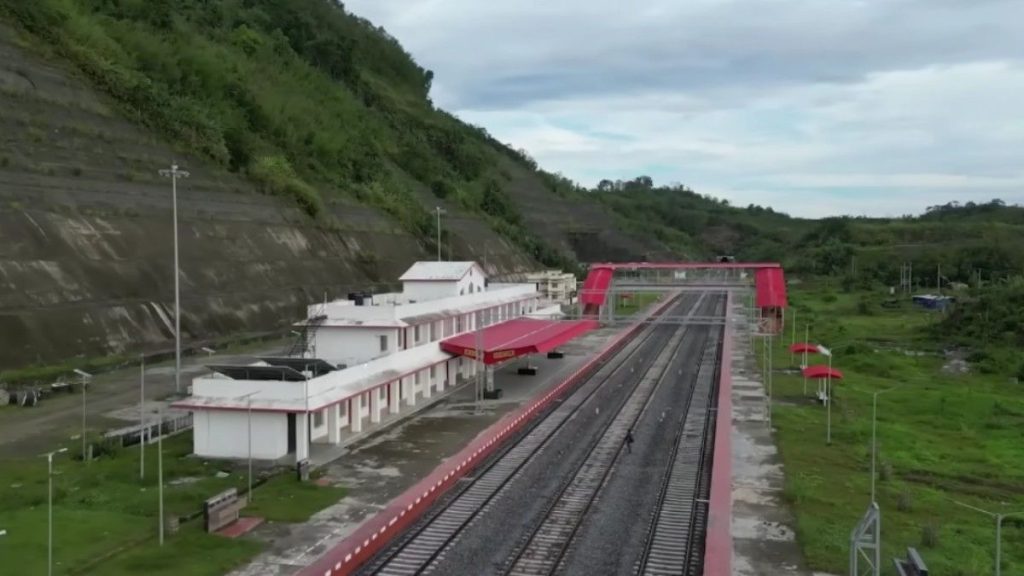


Rail Connectivity in the North East is witnessing a major transformation as several new railway lines are set to open this month. This expansion is aimed at improving accessibility, reducing travel time, and boosting economic growth in the region.
From a transport expert’s viewpoint, rail connectivity in the North East is not just about passenger convenience. It represents a strategic push to integrate remote areas, promote trade, tourism, and regional development, while ensuring safer and more efficient travel for millions of people in India’s northeastern states.
New Railway Lines Opening in the North East
Several new rail links and expansions are shaping rail connectivity in the North East this month. One of the most significant is the Bairabi–Sairang line, a 51.38 km broad‑gauge route that connects Mizoram’s capital Aizawl to the national network for the first time, transforming regional mobility and access.
In addition, Northeast Frontier Railway is advancing electrification projects across the region, including major sections such as Dibrugarh–Duliajan on the Rajdhani main route, improving efficiency and paving the way for faster, greener trains. These developments mark a continued government push to make travel safer, quicker, and more convenient for residents and visitors across Assam, Mizoram, Arunachal Pradesh, Tripura, and other northeastern states.
Benefits for Passengers and Local Communities
Improved rail connectivity in the North East will drastically reduce travel time, improve access to education, healthcare, and employment, and enhance daily life for residents. Local communities along the new routes are expected to see economic opportunities rise, from small businesses to tourism-related services.
The expansion also strengthens social integration in previously remote areas, ensuring that the North East becomes better connected to the rest of India.With the improved rail connectivity in the North East, freight movement will also become faster and more efficient, allowing local producers to reach larger markets across India. Tourism hubs like Tawang, Shillong, and Aizawl will become more accessible, attracting visitors and generating revenue for hotels, guides, and local businesses. Over time, these developments are expected to boost employment, entrepreneurship, and regional development, making the North East a more integrated and economically vibrant part of the country.
Strategic Importance for Trade and Tourism
Rail development is not only for passenger travel it has major implications for trade and tourism. Faster, reliable rail lines allow for more efficient movement of goods, including tea, handicrafts, and other regional products. Improved connectivity also makes the region a more attractive destination for domestic and international tourists, supporting economic growth and cultural exchange.
The government’s focus on rail connectivity in the North East underscores its strategy to integrate infrastructure with economic and social development.By improving rail connectivity in the North East, the government is opening doors for greater trade and investment in the region. Faster rail links make it easier to transport agricultural produce, handicrafts, and local goods to national markets, while also attracting investors to set up small and medium enterprises.
Challenges and Future Plans for Rail Expansion
Building rail lines in the North East comes with geographical and climatic challenges, such as hilly terrain, rivers, and heavy rainfall. Despite these hurdles, ongoing projects aim to connect remaining remote areas and increase the total rail network in the region.
Future plans include electrification of lines, modern signalling systems, and additional passenger amenities, ensuring that rail connectivity in the North East continues to improve and provide long-term benefits.
To overcome these challenges, engineers are using advanced construction techniques such as tunnels, bridges, and reinforced tracks, ensuring safety and reliability even in difficult terrain. With these improvements, rail connectivity in the North East is expected to expand further, reduce travel times, and support sustainable regional development, creating lasting benefits for passengers, businesses, and local communities alike.
The expansion of rail connectivity in the North East marks a significant milestone for the region. New routes not only make travel faster and safer but also stimulate trade, tourism, and regional development. With strategic planning, modern infrastructure, and government support, the North East is set to become a better-connected, economically vibrant, and socially integrated region, benefitting both residents and travellers.
Add Pioneer Today as a preferred source on Google – Click Here