
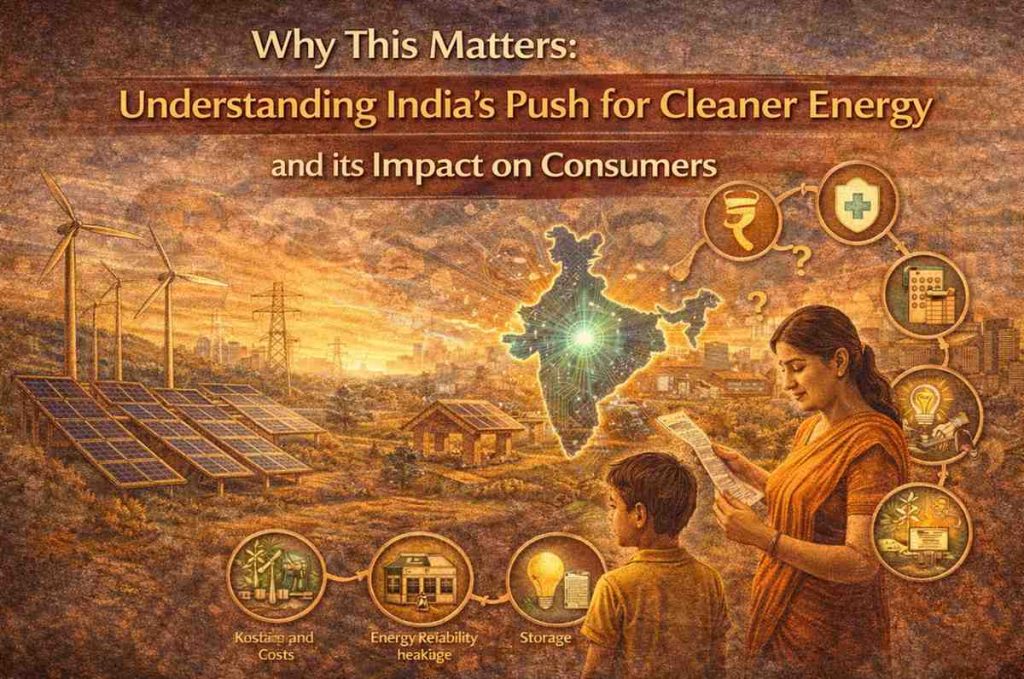


India’s energy landscape is undergoing a major transformation as the country accelerates its shift toward cleaner and more sustainable sources of power. Driven by climate commitments, energy security concerns, and rising consumer demand, this push is reshaping how electricity is produced, distributed, and consumed. While cleaner energy is often discussed in terms of environmental benefits, its implications for everyday consumers are equally significant, influencing electricity bills, energy access, and long-term affordability.
Why India Is Prioritising Cleaner Energy
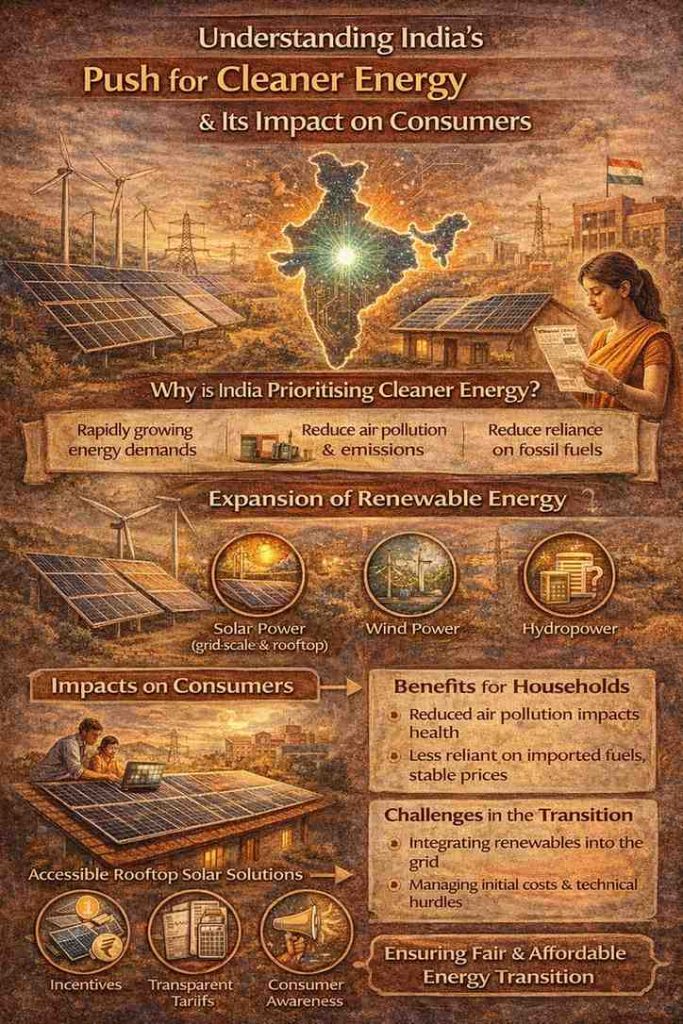
India’s growing economy and expanding population have led to a sharp rise in energy demand. Traditionally, this demand has been met largely through fossil fuels, particularly coal. However, reliance on conventional energy sources has raised concerns about air pollution, carbon emissions, and dependence on imported fuels.
The push for cleaner energy is rooted in the need to balance economic growth with environmental responsibility. By expanding renewable energy capacity and improving efficiency, India aims to reduce emissions, improve public health outcomes, and strengthen energy independence. This transition is also aligned with global climate commitments and long-term sustainability goals.
Expansion of Renewable Energy Sources
A central pillar of India’s clean energy push is the rapid expansion of renewable sources such as solar, wind, and hydropower. Large-scale solar parks, wind farms, and rooftop installations are becoming increasingly common across states.
For consumers, this expansion means a gradual diversification of electricity supply. Renewable energy, once considered expensive, has become more cost-competitive over time. Falling technology costs and improved efficiency have made renewables an attractive option for utilities and private players alike.
Impact on Electricity Costs for Consumers
One of the most immediate concerns for consumers is how the shift to cleaner energy affects electricity bills. In the short term, investments in new infrastructure, grid upgrades, and storage systems can add to costs. These expenses may be reflected in tariffs, especially during the transition phase.
However, over the long term, cleaner energy has the potential to stabilise or even reduce costs. Renewable sources are less vulnerable to global fuel price fluctuations, offering greater price predictability. As the share of clean energy grows, consumers may benefit from more stable and affordable electricity.
Role of Rooftop Solar and Distributed Energy
Cleaner energy is not limited to large power plants. Rooftop solar systems and distributed energy solutions are playing an increasingly important role in empowering consumers. Households, housing societies, and small businesses are installing solar panels to generate their own electricity and reduce dependence on the grid.
For consumers, this shift offers greater control over energy usage and expenses. While initial installation costs can be a barrier, falling prices and government incentives are making rooftop solar more accessible. Over time, such systems can significantly lower electricity bills and provide protection against tariff hikes.

Energy Access and Reliability
India’s clean energy push is also linked to improving energy access and reliability, particularly in rural and remote areas. Renewable energy projects, including mini-grids and off-grid solar solutions, are helping bring electricity to regions that were previously underserved.
For consumers in these areas, cleaner energy means more reliable power supply, fewer outages, and better quality of life. Improved access supports education, healthcare, and economic activity, highlighting the social impact of the energy transition.
Environmental and Health Benefits for Households
The benefits of cleaner energy extend beyond electricity costs. Reduced reliance on fossil fuels contributes to improved air quality, which has direct health implications for households. Lower pollution levels can reduce respiratory illnesses and healthcare expenses, particularly in urban and industrial regions.
Cleaner energy also supports more sustainable urban living by reducing noise pollution and environmental degradation. These indirect benefits, while less visible on monthly bills, significantly affect overall well-being.
Challenges in the Transition
Despite its promise, the transition to cleaner energy is not without challenges. Integrating renewable energy into existing grids requires significant investment in storage, transmission, and balancing technologies. Intermittency of solar and wind power poses technical challenges that must be managed carefully.
For consumers, these challenges can translate into transitional costs or temporary disruptions. Ensuring that the shift is gradual, inclusive, and well-regulated is essential to prevent undue burden on households.
Government Policies and Consumer Protection
Government policies play a crucial role in shaping how the clean energy transition affects consumers. Subsidies, incentives, and regulatory frameworks are designed to encourage adoption while protecting consumer interests.
Transparent tariff-setting mechanisms, support for vulnerable households, and clear communication about policy changes are critical to maintaining public trust. Consumer awareness and participation are also key to ensuring that benefits are widely shared.
What This Means for the Average Consumer
For the average consumer, India’s push for cleaner energy represents both change and opportunity. While there may be short-term adjustments in costs and usage patterns, the long-term outlook points toward more sustainable, reliable, and potentially affordable energy.
Consumers who adapt by improving energy efficiency, exploring rooftop solar, and staying informed about policy developments are better positioned to benefit from the transition.
The Road Ahead
India’s journey toward cleaner energy is a long-term transformation that will shape the country’s economic and environmental future. For consumers, its success will be measured not only by reduced emissions but also by affordability, reliability, and accessibility of power.
Why this matters is clear: cleaner energy is not just an environmental goal but a consumer issue that affects daily life. As India moves forward, aligning sustainability with consumer interests will be essential to ensuring that the clean energy transition delivers benefits for all.
Add pioneertoday.in as preferred source on google – click here