
Stock Market LIVE Updates: Sensex, Nifty Trade Flat as Rupee Hits Record Low Against Dollar
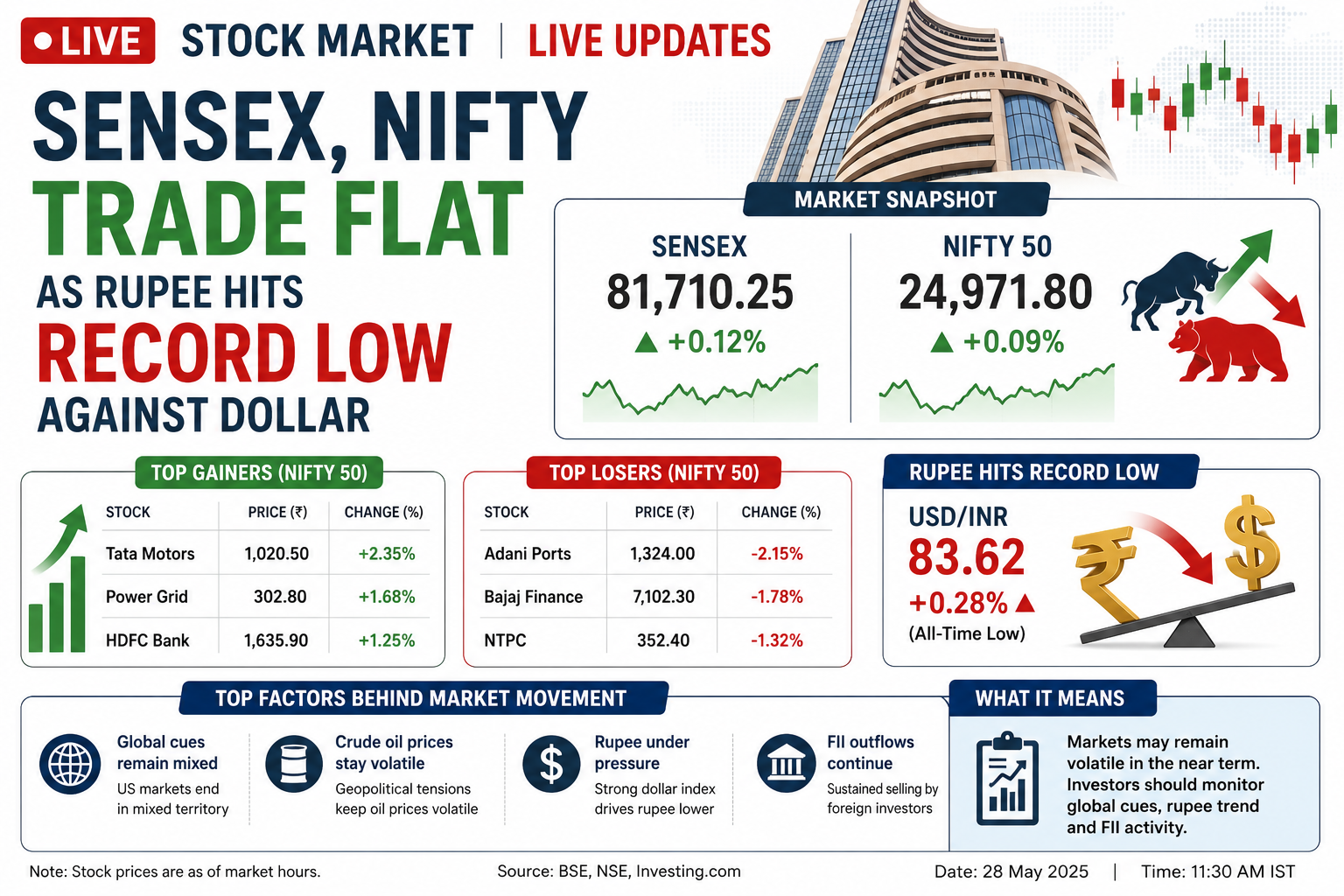
Indian benchmark equity indices traded in a narrow range, with the BSE Sensex and NSE Nifty showing muted movement as investors balanced domestic macroeconomic concerns against global market cues. Market sentiment remained cautious as the Indian rupee slipped to a record low against the U.S. dollar, intensifying concerns around inflation, import costs, and foreign capital flows.
The flat opening reflects a wait-and-watch approach among investors amid heightened macroeconomic uncertainty.
Markets Open With Limited Direction
Benchmark indices remained largely range-bound in early trade, suggesting cautious investor participation despite recent volatility. Flat market movement often reflects uncertainty rather than confidence, especially when major macroeconomic triggers remain unresolved.
Market participants are closely monitoring:
- Rupee weakness
- Crude oil prices
- Foreign institutional investor activity
- Global market sentiment
- Sector rotation trends
- Domestic inflation concerns
Rupee’s Record Low Adds Pressure
The Indian currency’s sharp weakness against the U.S. dollar remains a key concern for equity investors. A weaker rupee can raise import costs, increase inflationary pressure, and affect corporate profitability, particularly for businesses dependent on imported inputs or foreign currency obligations.
However, export-oriented sectors such as IT may see selective support from currency depreciation.
Currency Volatility May Influence Sectoral Performance
The rupee’s record low against the U.S. dollar could create mixed implications across sectors, shaping investor positioning through the trading session. Export-oriented companies, particularly in information technology and select pharmaceutical segments, may see relative support because foreign currency earnings become more valuable in rupee terms. However, sectors heavily dependent on imported raw materials, fuel, equipment, or overseas financing could face margin pressure if currency weakness persists.
Global Cues Remain a Key Market Trigger
Indian equities continue to remain sensitive to international developments including U.S. monetary policy expectations, crude oil movement, geopolitical uncertainty, and broader risk appetite across global markets. Investors often remain cautious when multiple macro risks converge, particularly when domestic currency weakness adds to inflation concerns.
Institutional Activity Will Be Closely Watched
Foreign institutional investor behaviour remains an important sentiment driver for Indian markets, especially during volatile sessions. Sustained selling pressure from overseas investors can amplify market caution, while stabilisation in capital flows may help improve confidence.
Volatility Likely to Continue
Analysts may continue monitoring whether benchmark indices break out of their current narrow range or remain directionless through the session. Market participants often look for stronger institutional conviction, sector-wide participation, and macroeconomic clarity before taking aggressive directional positions.
Sector Performance Likely to Remain Mixed
With benchmark indices trading flat, sector-specific movement may become more important.
Potential themes in focus:
- IT resilience on weaker rupee support
- Oil-sensitive sectors under pressure
- Banking sentiment tied to macro stability
- FMCG inflation-linked cost concerns
Why Investor Sentiment Remains Cautious
Several overlapping factors continue influencing market behaviour:
- Elevated crude oil prices
- Global geopolitical uncertainty
- Rupee depreciation
- FII outflows
- Inflation risks
- Interest rate sensitivity
Key Insights
- Indian benchmark indices BSE Sensex and Nifty 50 traded largely flat to weak as investors weighed global uncertainty, rising crude oil prices, and continued foreign fund outflows.
- The Indian rupee slipped to a fresh record low against the US dollar, reflecting pressure from elevated oil import costs, a stronger dollar, and geopolitical tensions impacting emerging markets.
- Market sentiment remained cautious amid concerns over inflation risks and the possibility of tighter global monetary conditions as bond yields stayed elevated.
- Foreign institutional investor (FII) selling continued to weigh on Dalal Street, adding pressure to equities and the rupee simultaneously.
- Export-oriented sectors such as IT and pharmaceuticals showed relative resilience as a weaker rupee improves overseas revenue realisations for dollar-earning companies.
- Analysts are closely monitoring crude oil prices, central bank intervention, and geopolitical developments for cues on near-term market direction and currency stability.
Image source: Pexels
Also read: Samvardhana Motherson FY26 Results: Reports Record Annual Revenue
Add Pioneer Today as a preferred source on Google – Click Here
Last Updated on: Wednesday, May 20, 2026 3:03 pm by Koushik Velpuri | Published by: Koushik Velpuri on Wednesday, May 20, 2026 3:03 pm | News Categories: Business
About The Author