Sustainable Lifestyle: Easy Tips to Reduce Carbon Footprint and Manage Water Scarcity During Summer 2026
As India enters another intense summer, household decisions on energy use, water consumption and daily habits have taken on greater significance. Rising temperatures, longer heatwaves and uneven rainfall patterns are placing growing pressure on electricity grids and local water supplies. While national and state governments continue to expand renewable energy, water conservation programmes and urban resilience plans, the everyday choices made by households remain a critical part of the response. In summer 2026, small, practical lifestyle changes can meaningfully reduce carbon emissions and help communities cope with water scarcity without compromising basic comfort or productivity.
Background: Why summer lifestyles matter more now
Climate science has consistently shown that rising global temperatures are increasing the frequency and intensity of extreme heat events. In India, these trends are particularly visible during summer months, when prolonged heat drives up electricity demand for cooling and places stress on already stretched water resources. Urban areas are especially vulnerable due to high population density, heat-trapping built environments and dependence on centralised water and power systems.
At the same time, groundwater depletion remains a major concern in many parts of the country. Decades of over-extraction, combined with changing rainfall patterns, have reduced the reliability of wells and boreholes that millions of households rely on during dry months. Urban water shortages, tanker dependence and supply rationing have become recurring features of summer life in several cities.
Against this backdrop, lifestyle choices are no longer just personal preferences; they influence collective outcomes. Lower household energy demand reduces pressure on fossil-fuel-based power generation, while water-saving habits slow depletion of local sources. When adopted widely, these measures support broader policy goals related to climate mitigation, energy security and water sustainability.
Policy context shaping household behaviour
Over the past few years, India’s policy framework has increasingly recognised the role of demand-side action. Energy efficiency standards for appliances have expanded, making it easier for consumers to identify products that use less electricity over their lifetime. Building codes and urban planning guidelines are slowly incorporating passive cooling and water-sensitive design, particularly in new developments.
Water governance has also shifted towards conservation and recharge. National and state programmes promote rainwater harvesting, restoration of water bodies and responsible groundwater use. In many cities, new buildings are required to install rainwater harvesting systems, while older neighbourhoods are encouraged to retrofit existing structures.
These policies do not eliminate scarcity on their own, but they create an enabling environment where household-level actions become more effective and impactful.
Summer energy demand and its carbon implications
Cooling is the single largest driver of household electricity consumption during Indian summers. Air-conditioners, coolers and fans collectively account for a sharp rise in peak demand during heatwaves. When this demand is met by coal-based power plants, it leads to higher carbon emissions and local air pollution.
Household choices around cooling therefore have system-wide implications. The efficiency of appliances, how they are operated and how buildings are managed all influence electricity consumption. Even modest reductions in per-household demand, when multiplied across millions of homes, can significantly ease strain on grids and reduce emissions.
Transport choices during summer also matter. Increased travel during school holidays and festival seasons raises fuel consumption. Shifting some trips to public transport, walking or cycling, where feasible, lowers emissions and reduces urban congestion.
Reducing household carbon footprint through daily choices
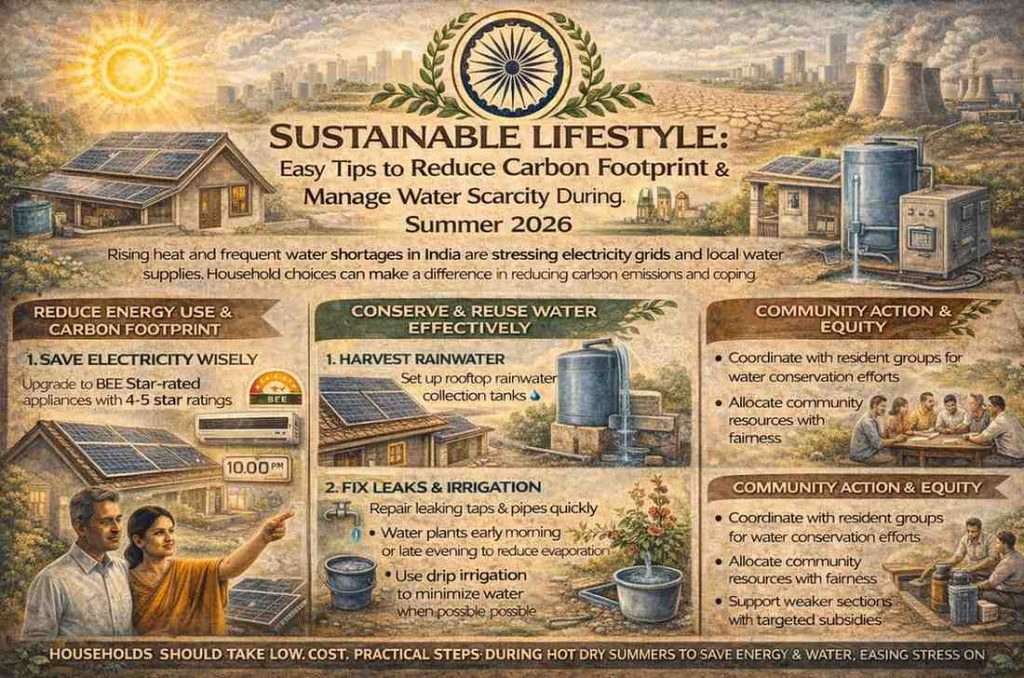
Energy efficiency remains the most accessible entry point for households seeking to reduce their carbon footprint. Switching to LED lighting, which consumes far less electricity than conventional bulbs, delivers immediate savings. Using energy-efficient appliances, particularly refrigerators and air-conditioners with higher efficiency ratings, reduces long-term electricity use.
Operational habits are equally important. Setting air-conditioners at moderate temperatures rather than the lowest possible setting, using ceiling fans to circulate cooled air and ensuring regular maintenance of filters and coils can significantly cut energy consumption without sacrificing comfort. Simple measures such as closing curtains on sun-facing windows during the day or improving ventilation in the evening reduce the need for mechanical cooling.
Kitchen practices also play a role. Using pressure cookers, covering pots while cooking and avoiding unnecessary use of ovens during the hottest hours save energy and keep indoor temperatures lower. Water heaters should be set only as high as needed, and insulated tanks and pipes help prevent heat loss.
Managing electricity use more intelligently
Time-of-use awareness can further reduce emissions. Where electricity tariffs vary by time of day, shifting energy-intensive activities such as laundry or dishwashing to off-peak hours lowers both bills and grid stress. For households with rooftop solar systems, running appliances during daylight hours allows direct use of clean energy and reduces dependence on the grid.
As smart meters and digital billing systems become more common, households have better visibility into their consumption patterns. Tracking monthly usage and identifying spikes helps target specific behaviours or appliances for improvement.
Water scarcity: a growing summer challenge
Water scarcity during summer is no longer limited to drought-prone regions. Rapid urbanisation, population growth and climate variability have made water shortages a recurring issue even in cities that once enjoyed relatively stable supplies. Municipal systems struggle to keep pace with demand, leading to intermittent supply, tanker dependence and disputes over access.
Household water use accounts for a substantial share of urban demand, particularly for bathing, cleaning, gardening and flushing. Reducing waste and reusing water where safe can ease pressure on local sources and improve resilience during peak summer months.
Simple steps to conserve water at home
Rainwater harvesting is one of the most effective household-level interventions. Even small rooftop systems can capture significant volumes during pre-monsoon showers, providing water for non-potable uses or helping recharge groundwater. Where individual installations are not feasible, collective systems managed by housing societies can deliver shared benefits.
Leak detection and repair are among the easiest ways to save water. Dripping taps, leaking pipes and overflowing storage tanks can waste hundreds of litres over a single week. Installing float valves or level sensors in overhead tanks prevents overfilling, while regular inspection of plumbing reduces unnoticed losses.
Gardening practices also influence water use. Watering plants during early morning or evening reduces evaporation. Choosing native or drought-tolerant plants lowers irrigation needs, while mulching helps retain soil moisture.
Reusing water safely
Greywater reuse, when done carefully, reduces freshwater demand. Water used for washing vegetables, rinsing utensils or laundry can be reused for cleaning floors, flushing toilets or watering non-edible plants. Simple collection methods, such as using buckets or basic diversion systems, are often sufficient.
Health and safety considerations are important. Greywater should not be stored for long periods, and it should not be used on edible crops without appropriate treatment. Clear household guidelines and awareness prevent unintended risks.
Linking water and energy savings
Water and energy use are closely linked. Pumping water to overhead tanks consumes electricity, and inefficient pumps increase both water and energy waste. Using appropriately sized, energy-efficient pumps and installing automatic controllers reduces unnecessary pumping cycles.
Rooftop solar systems can further reduce the carbon footprint of water use by powering pumps during daylight hours. This combination is particularly effective in areas dependent on borewells, where pumping demand is high during summer.
Community-level approaches to resilience
Individual efforts are most effective when reinforced by community action. Apartment complexes and neighbourhood groups can coordinate water storage, rainwater harvesting and waste management, achieving economies of scale and more reliable outcomes.
Community guidelines on water use during peak scarcity periods help prevent conflict and ensure equitable access. Shared investments in infrastructure, such as recharge pits or efficient pumping systems, reduce costs for individual households and improve long-term sustainability.
Citizen participation also strengthens accountability. Reporting leaks, illegal extraction or service disruptions helps municipal authorities respond more quickly and improves overall system performance.
Addressing affordability and equity
Not all households have the same capacity to invest in efficiency upgrades or water infrastructure. For low-income families, upfront costs can be a barrier even when long-term savings are clear. In such cases, low-cost behavioural changes become especially important.
Public policy has a role in bridging this gap. Targeted subsidies, community facilities and shared infrastructure help ensure that conservation does not become a privilege of the affluent. Equity-focused approaches also prevent disproportionate hardship during periods of scarcity.
Avoiding common mistakes
Some conservation efforts fail due to poor design or maintenance. Rainwater harvesting systems that are not properly sealed can become mosquito breeding sites. Greywater reuse without basic precautions can pose health risks. Over-sizing appliances or systems wastes resources and money.
Households should seek reliable technical guidance and follow local regulations when installing new systems. Periodic maintenance is essential to ensure that conservation measures remain effective and safe.
Measuring progress at the household level
Tracking consumption is a powerful motivator. Comparing electricity and water bills across seasons reveals the impact of specific changes. Noting reductions in tanker deliveries, pump runtime or food waste provides tangible evidence of progress.
Such monitoring also helps households adjust strategies over time, focusing on measures that deliver the greatest benefits relative to effort and cost.
Conclusion: small changes, lasting impact
Summer 2026 underscores a reality that is becoming increasingly clear across India: sustainability begins at home. While large-scale infrastructure and policy reforms are essential, household choices play a decisive role in shaping energy demand and water availability during the most stressful months of the year.
By adopting practical, low-cost measures to reduce energy use and conserve water, households can protect themselves from rising bills and shortages while contributing to broader environmental goals. When these actions are coordinated at community level and supported by responsive local governance, their impact multiplies.
Sustainable summer living is not about sacrifice; it is about efficiency, awareness and resilience. As climate pressures intensify, such everyday practices will become a defining feature of how Indian cities and communities adapt and thrive.
Add pioneertoday.in as preferred source on google – click here
Last Updated on: Thursday, January 29, 2026 12:32 pm by Pioneer Today Team | Published by: Pioneer Today Team on Thursday, January 29, 2026 12:32 pm | News Categories: News
About The Author