
Third Time Fuel Price Hike in 9 Days: What’s Making Petrol and Diesel More Expensive?
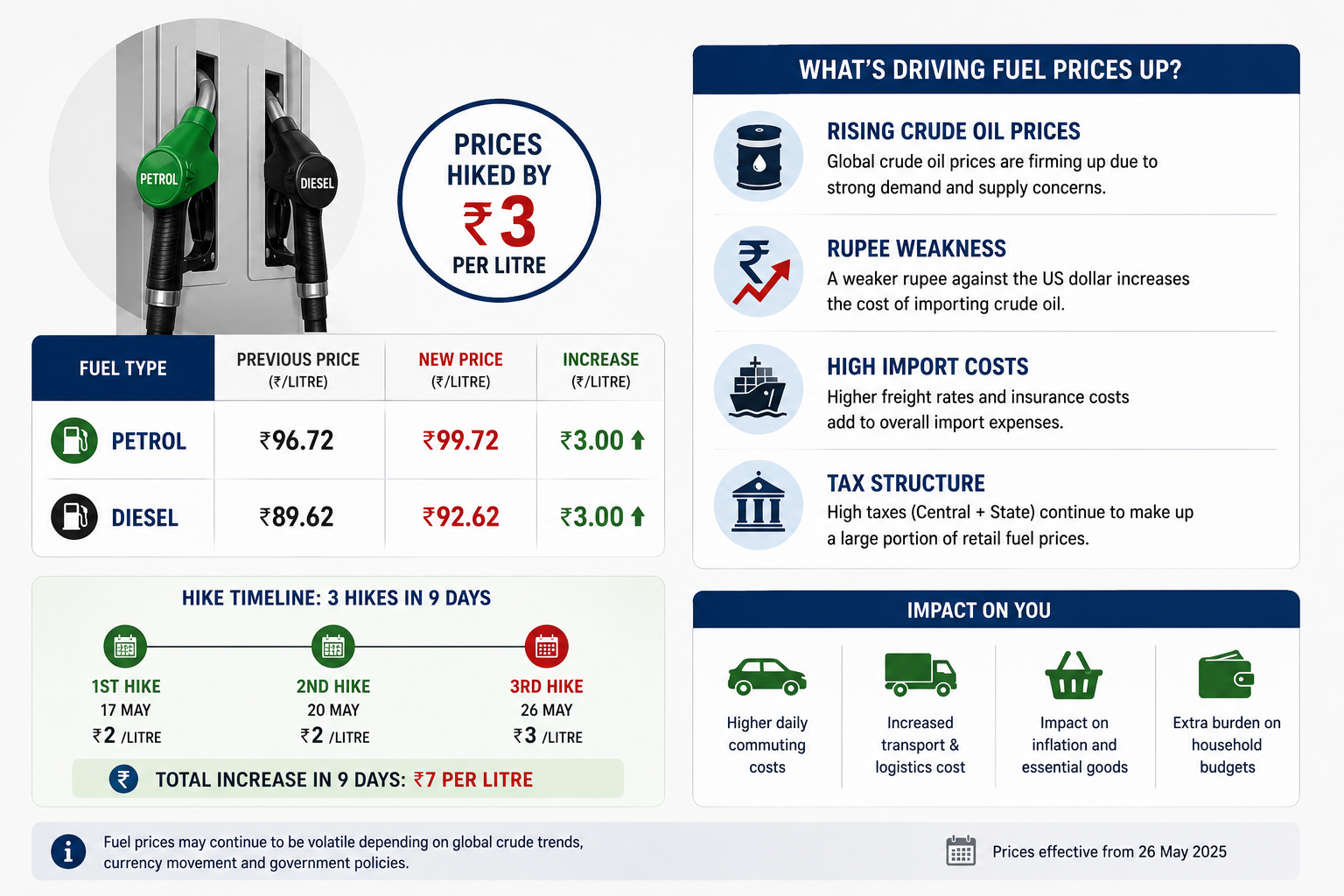
Petrol and diesel prices have been increased for the third time in just nine days, intensifying pressure on consumers and businesses as fuel cost concerns mount. The repeated hikes reflect a combination of global crude oil volatility, currency weakness, supply-side risks, and broader energy market uncertainty.
The latest fuel price increases are likely to attract widespread attention because of their direct impact on household budgets, transport costs, and inflation.
Global Crude Oil Prices Remain the Biggest Trigger
One of the primary reasons behind repeated fuel price hikes is the continued pressure in international crude oil markets.
Key contributing factors include:
- Rising global crude benchmarks
- Supply uncertainty
- Production-side risks
- Shipping and logistics concerns
- Market speculation linked to geopolitical events
Since India depends heavily on imported crude oil, sustained international price increases can directly affect domestic fuel economics.
Weak Rupee Adds Further Pressure
Fuel pricing is also heavily influenced by currency movement.
A weaker Indian rupee against the U.S. dollar makes imported crude more expensive because oil transactions are largely dollar-denominated.
This creates a double pressure:
- Higher crude prices globally
- Higher import cost due to currency depreciation
Why Hikes Are Happening Repeatedly
Frequent revisions often occur when oil marketing companies respond to evolving input costs rather than making a single large adjustment.
Possible reasons include:
- Gradual price pass-through
- Market cost recalibration
- Inventory replacement cost changes
- Margin management
Impact on Consumers and Businesses
Repeated fuel hikes affect more than vehicle owners.
Likely consequences include:
- Higher commuting costs
- Rising transport charges
- Delivery and logistics inflation
- Increased business operating costs
- Pressure on small enterprises
Inflation Risk Increases
Fuel price increases often trigger broader inflationary effects because transportation is embedded in the cost structure of multiple sectors.
Areas commonly affected:
- Food supply chains
- Consumer goods movement
- Manufacturing logistics
- Public transportation economics
Fuel Price Pressure May Persist
If international crude oil prices remain elevated and currency pressures continue, consumers may face continued uncertainty around fuel affordability in the coming weeks. Repeated price increases can influence travel planning, logistics costs, and household spending decisions, particularly for commuters and transport-dependent businesses.
Market observers will closely track crude price movement, geopolitical developments, and domestic pricing decisions to assess whether fuel rates stabilise or face additional upward revisions in the near term.
Why Markets Watch Fuel Prices Closely
Persistent fuel inflation can influence:
- Consumer spending sentiment
- Monetary policy expectations
- Business profitability
- Economic growth outlook
Unless crude prices stabilise, the rupee strengthens, or domestic pricing dynamics shift, fuel cost pressure may remain an important economic concern in the near term.
Key Insights
- Petrol and diesel prices in India have been hiked for the third time in nine days, reflecting sustained upward pressure on fuel costs.
- The increase is largely driven by rising global crude oil prices, which directly impact domestic fuel pricing in an import-dependent country like India.
- A weaker rupee against the US dollar has further increased the cost of crude imports, adding to pricing pressure.
- Oil marketing companies are adjusting retail prices to align with international benchmarks and recover input costs.
- Global factors such as OPEC+ production decisions, geopolitical tensions, and supply constraints continue to influence crude price trends.
- Frequent fuel price hikes may have a knock-on effect on inflation, transport costs, and overall household expenses.
- The situation remains fluid, with future price movements dependent on global oil markets, currency trends, and potential government intervention.
Image source: Unsplash
Also read: SEBI Introduced One-Day-a-Week Work-From-Home Policy for Grade A to Grade C Employees
Add Pioneer Today as a preferred source on Google – Click Here
Last Updated on: Saturday, May 23, 2026 11:46 am by Koushik Velpuri | Published by: Koushik Velpuri on Saturday, May 23, 2026 11:46 am | News Categories: Business
About The Author