Chandrayaan-2 Makes Big Discovery: Possible Subsurface Ice Found Near Moon’s South Pole
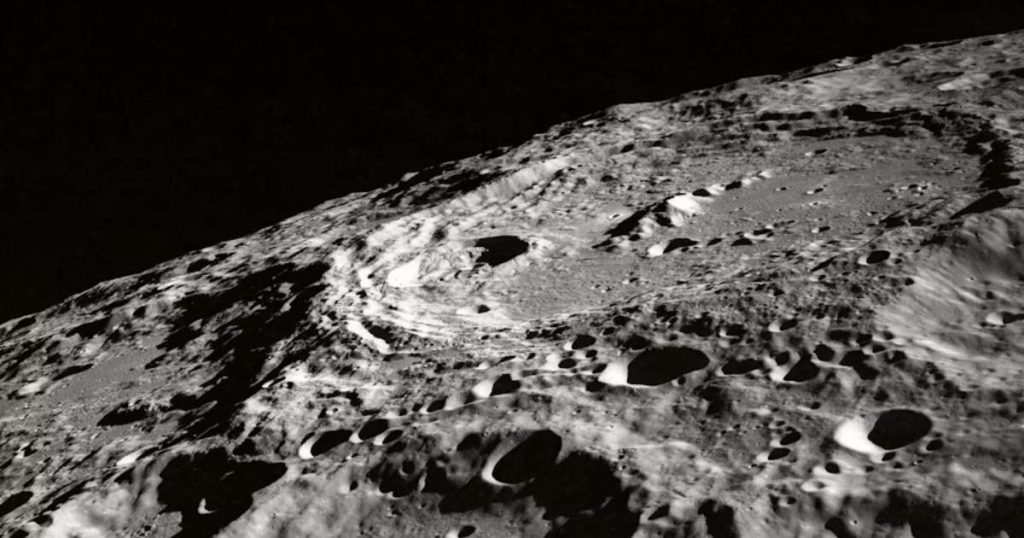
India’s lunar mission Chandrayaan-2 has reportedly detected possible evidence of subsurface water ice near the Moon’s south pole, marking another major scientific milestone for India’s space research efforts. The findings are considered significant because lunar ice deposits could play a crucial role in future human exploration, long-duration space missions, and scientific research on the Moon.
The development has once again placed global attention on the Moon’s south polar region, one of the most scientifically valuable and strategically important areas in modern lunar exploration.
Why the Discovery Matters
Scientists around the world have long been interested in the possibility of water ice on the Moon because it could support future space missions in multiple ways.
Potential uses of lunar ice include:
- Drinking water for astronauts
- Oxygen generation
- Rocket fuel production
- Long-duration lunar habitation
- Scientific study of lunar history
If confirmed, subsurface ice deposits could become a critical resource for future lunar infrastructure.
Moon’s South Pole Remains a Key Focus Area
The lunar south pole has become one of the most heavily studied regions in global space exploration because certain craters remain permanently shadowed and extremely cold, creating conditions where water ice may survive for billions of years.
Why the region is important:
- Extremely low temperatures
- Permanently shadowed craters
- Higher probability of preserved ice
- Strategic value for future lunar bases
Several international space agencies are now prioritising south pole exploration missions.
Chandrayaan-2 Continues Delivering Scientific Results
Although Chandrayaan-2’s lander mission faced challenges during its landing attempt, the orbiter component has continued functioning successfully and delivering valuable scientific observations.
The orbiter has contributed to:
- Lunar surface mapping
- Mineral analysis
- Topographical studies
- Exosphere observations
- Ice detection research
Its long operational life has significantly strengthened India’s scientific contribution to lunar research.
India’s Growing Space Capabilities in Focus
The findings further reinforce India’s emergence as a major global space power, especially after the success of Chandrayaan-3 and other high-profile missions by Indian Space Research Organisation (ISRO).
India’s lunar missions have increasingly drawn international recognition for:
- Cost-effective engineering
- Scientific innovation
- Deep-space exploration capability
- Advanced remote sensing technology
Global Race for Lunar Resources Intensifies
As countries and private space companies expand lunar exploration plans, discoveries linked to water ice are becoming strategically important.
Future missions may focus on:
- Resource extraction
- Lunar base development
- Human habitation research
- Sustainable Moon exploration
Key Insights
- Chandrayaan-2 has detected possible signs of subsurface ice deposits near the Moon’s south pole, based on data from its onboard instruments.
- The findings are derived from observations by the orbiter’s dual-frequency synthetic aperture radar (DFSAR), which helps identify water-ice signatures beneath the lunar surface.
- Scientists suggest the ice may be present in permanently shadowed craters, where extremely low temperatures allow water to remain stable over long periods.
- The discovery strengthens the Moon’s south pole as a key target for future exploration and potential human missions, given the importance of water for life support and fuel generation.
- The results also contribute to the global scientific effort to understand the distribution and form of lunar water, a critical factor in long-term space habitation.
- India’s findings complement earlier observations by missions from NASA and other international space agencies, adding depth to ongoing lunar research.
- The development underscores India’s growing capabilities in planetary science and supports future missions like Chandrayaan-3 and beyond.
Image source: Unsplash
Also read: Supreme Court to Review CBSE Three-Language Policy Amid Student Burden Concerns
Add Pioneer Today as a preferred source on Google – Click Here
Last Updated on: Thursday, May 28, 2026 11:07 am by Koushik Velpuri | Published by: Koushik Velpuri on Thursday, May 28, 2026 11:07 am | News Categories: News, Technology
About The Author